Characters
Why You Hate Umbridge More Than Voldemort
Dolores Umbridge never killed anyone. And still, plenty of people hate her more than Voldemort. There's a reason, and it says more about us than about her.
If you ever finished Order of the Phoenix wanting to throw the book across the room, you're not the only one.
A Fairy-Tale Monster and Someone You Know
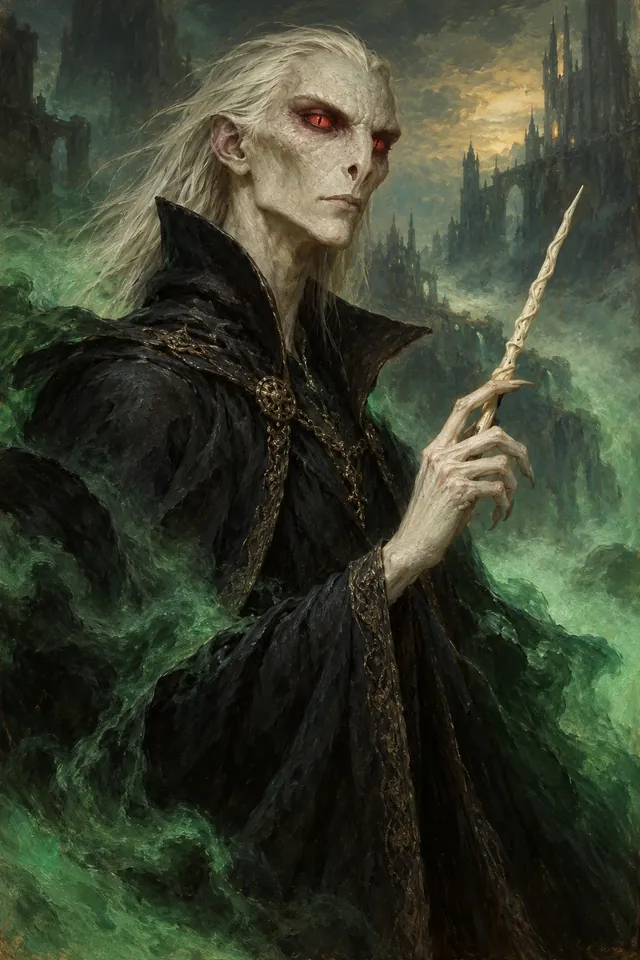
Voldemort is a fantasy creature. A noseless wizard who splits his soul into pieces so he won't die. Nobody has ever met anyone like that. His evil is enormous, but distant. We can hate him without discomfort, because we'll never run into him.
Umbridge, you do know. She's the teacher who humiliates you with a little smile. The boss who enjoys quoting you the rulebook. The authority who punishes you "for your own good." Her cruelty is small, everyday and completely recognizable. That's why it hurts more.
Cruelty With a Bow
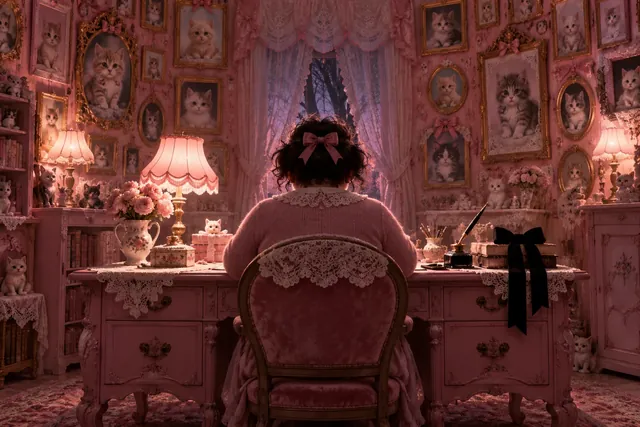
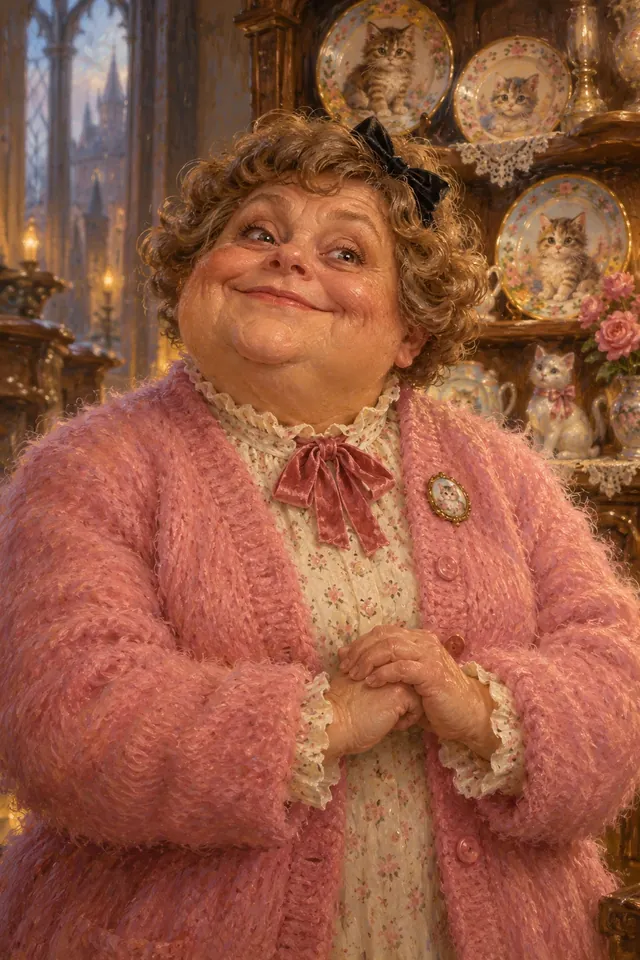
Rowling builds her from details that give you chills precisely because they're so sweet. A pink cardigan. A black velvet bow in her hair. A girlish little voice. That "hem, hem" to interrupt anyone. And an office full of decorative plates with kittens that meow (Order of the Phoenix, ch. 13).
In that office, at his first detention, she hands Harry a black quill and tells him to write "I must not tell lies." There's no ink. The quill writes with his blood and the sentence carves itself into the back of his hand. Night after night. To a fifteen-year-old boy, for telling the truth about Voldemort's return.
She Didn't Need a Dark Lord
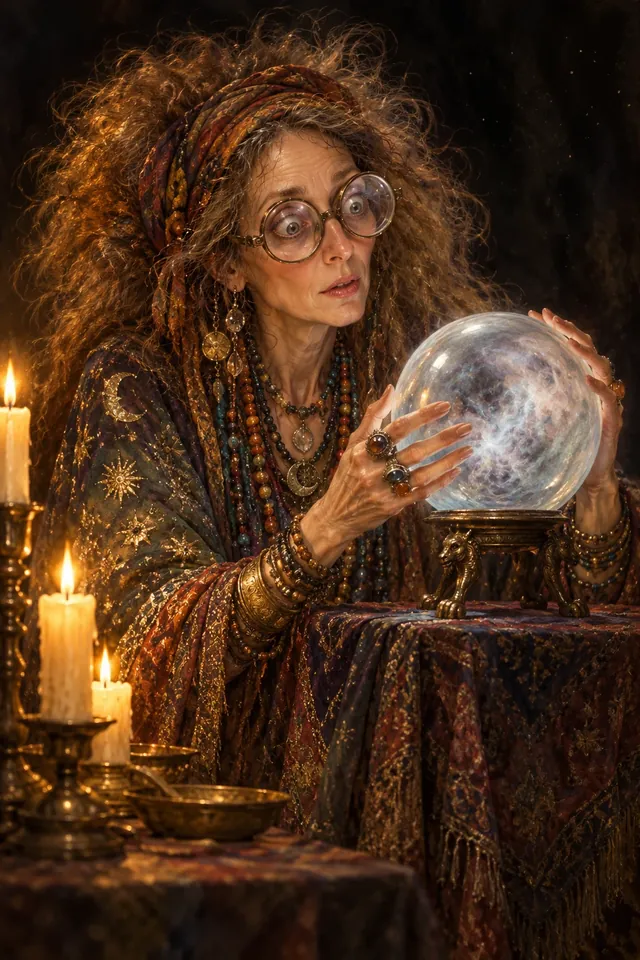
This is the central point. Umbridge doesn't work for Voldemort. When she appears, she's Minister Fudge's undersecretary, sent to Hogwarts to keep watch on Dumbledore. And she gains power legally: education decrees, the title of High Inquisitor, the authority to inspect teachers, ban clubs, and fire Trelawney and throw her out of the castle in front of everyone (ch. 26).
All signed, all with an official seal. Voldemort breaks the rules. Umbridge is the rules. Nobody forced her to be cruel; the system simply gave her permission.
The proof comes in Deathly Hallows (ch. 13). With the Ministry in Voldemort's hands, Umbridge presides over the commission that interrogates Muggle-borns and accuses them of having "stolen" magic from someone. Around her neck hangs Slytherin's locket, which she took from a thief and flaunts as a family heirloom. Nothing changes in her: the same sweet tone, the same satisfaction. They just gave her a bigger office.
What She Did, Without the Pink
In Order of the Phoenix, Umbridge:
- Punishes students with a quill that writes in their own blood.
- Admits she was the one who sent the Dementors to attack Harry over the summer (ch. 32).
- Is about to cast the Cruciatus Curse on him to get information (ch. 32).
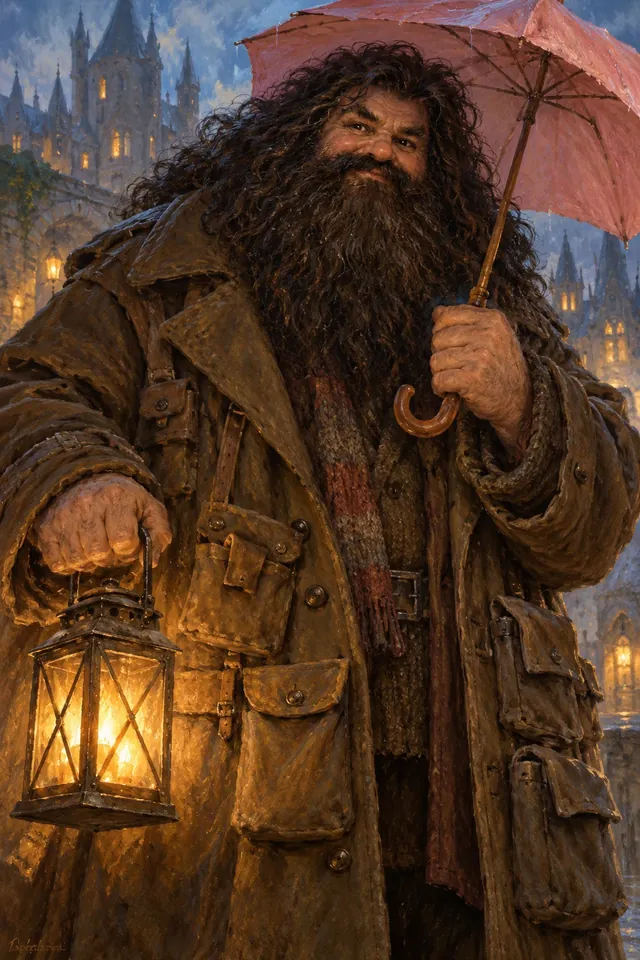
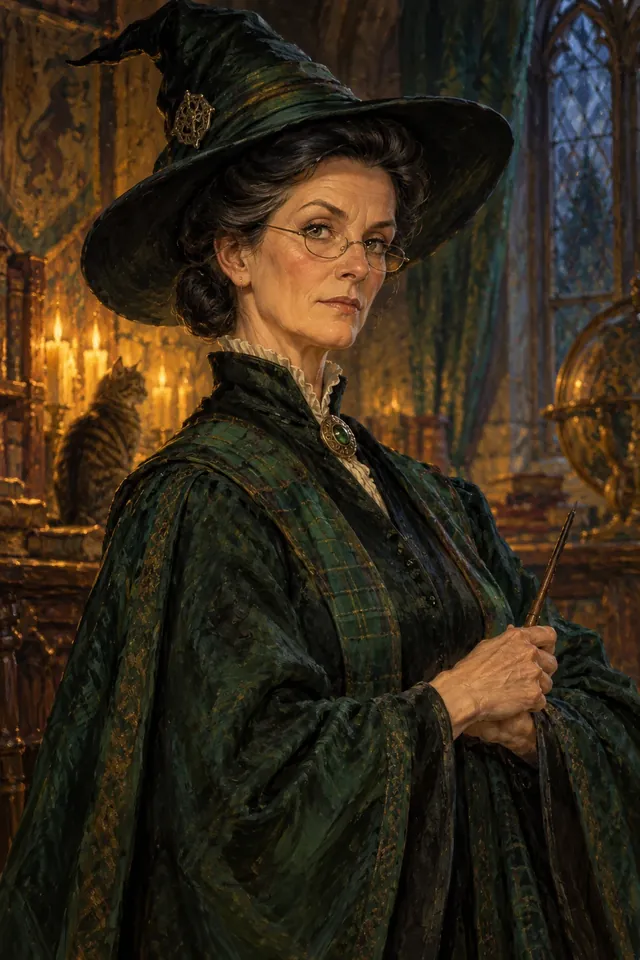
- Sends Ministry officials to arrest Hagrid at night. McGonagall comes out to defend him and takes four Stunning Spells to the chest (ch. 31).
In any other context, that would be a list for Azkaban. She did it with her badge on, convinced she was right.
Book vs. Movie
- The decrees. The movie shows them as plaques on a wall, which works very well visually, but the book makes clearer how she eats away at the school step by step.
- The Dementors and the Cruciatus. The confession is in the movie, though shorter.
- Umbridge at the Ministry appears in Deathly Hallows, Part 1, and it's one of the scenes closest to the book.
What Almost Nobody Notices
- Umbridge never doubts. In her head she's the heroine bringing order to a messy school. That's why she's so frightening: evil that believes itself good is the hardest to stop.
- The one who defeats her isn't a wizard. It's the centaurs, in the Forbidden Forest (Order of the Phoenix, ch. 33). And what sinks her is her own contempt: she calls them "half-breeds" to their faces.
- The "banality of evil." The philosopher Hannah Arendt used that phrase to describe ordinary people who do terrible harm just because they follow the rules without questioning them. It doesn't come from the books, but Umbridge is a perfect example.
The Uncomfortable Question
Umbridge was sure she was the good one. She never doubted. How sure are you of which side you'd be on if someone handed you a rulebook, a seal and the chance to feel righteous?
If you want to know which house the Sorting Hat would put you in, take the house quiz. And if you like the dark side of the saga, start with the first Horcrux: Tom Riddle's Diary: Voldemort's First Horcrux Explained.
Frequently Asked Questions
Was Umbridge a Death Eater?
No. She never had the Dark Mark. She was a Ministry official who did very well under Voldemort's regime.
What house was Umbridge in?
The books don't say. Rowling placed her in Slytherin outside the books.
What happened to Umbridge in the end?
In Order of the Phoenix the centaurs carry her off and she loses her power at Hogwarts. In Deathly Hallows she reappears at the Ministry, and Harry steals the locket from her. After that she doesn't appear again in the books.
This article has a video version on our TikTok.
Content created with AI assistance, reviewed and edited by our editorial team.
Characters in this article
More articles

Severus Snape: Hero or Villain? What the Books Say
Lily, the prophecy, "Always," the silver doe and his cruelty to students. Why Snape is both hero and villain, with chapters from the books.
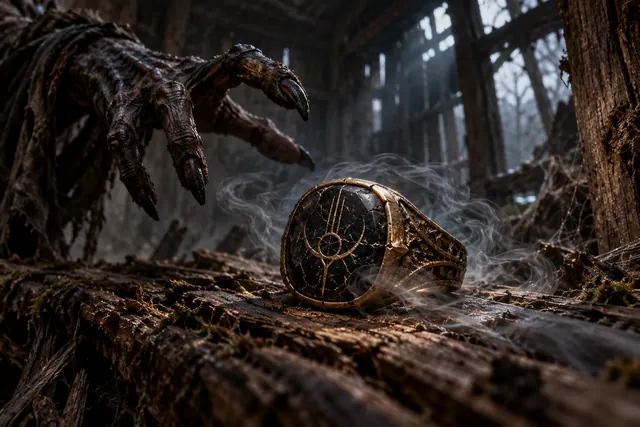
Gaunt's Ring: The Horcrux That Doomed Dumbledore
The story of Marvolo Gaunt's ring, the Resurrection Stone and the curse that sealed Dumbledore's death. Book chapters, movie differences and details.
Gryffindor House Explained: What Nobody Tells You
Gryffindor isn't the house of the good guys, it's the house of impulse. Pettigrew, Sirius, James and Neville show what courage really means in the books.