
The houses
Ravenclaw House: Helena's Wound and Luna's Freedom
Ravenclaw is the only house whose treasure was stolen by its founder's own daughter. The house of brilliant minds carries the most human wound of all: feeling that you're never enough.
It's Not the House of the Straight-A Students
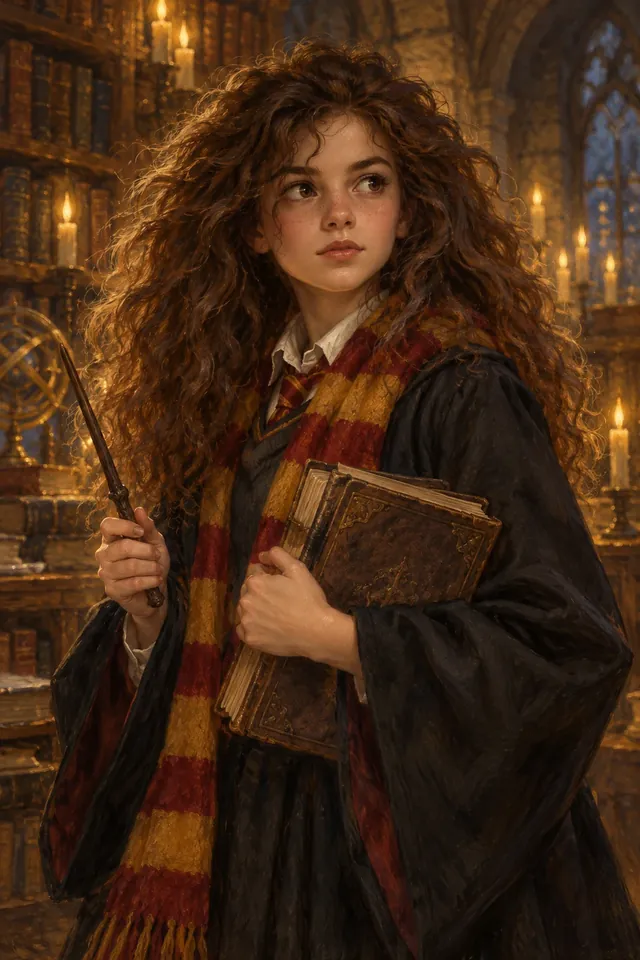
This is the most common mix-up. If Ravenclaw were the house of grades, Hermione would have ended up there. She's the best student of her generation, and on the train in Philosopher's Stone (Sorcerer's Stone in the US), ch. 6, she already says she wants Gryffindor, though Ravenclaw "wouldn't be so bad." The Sorting Hat sends her to Gryffindor.
What Ravenclaw asks for isn't memory or discipline. It's curiosity. People who can't stop wondering why, who connect things nobody else connects, who enjoy a strange idea even when it won't help on the exam. You can fail a test and still be very Ravenclaw.
The proof is at the door of its common room. There's no password. An eagle-shaped knocker asks you a question, and you have to answer it. In Deathly Hallows (ch. 29), the question is where vanished objects go. There's no right answer to memorize. You have to think.
Rowena and Helena
Rowena Ravenclaw was the brightest witch of her age. Her diadem, according to legend, gave wisdom to whoever wore it, and it carried her most famous line engraved on it: wit beyond measure is man's greatest treasure.
Her daughter, Helena, grew up in her shadow. Everyone admired Rowena. Nobody admired Helena. So one day she stole the diadem, because she wanted to be cleverer than her mother, and fled to Albania.
Rowena fell ill and sent a man who loved Helena to find her. She refused to come back. He killed her in a fit of rage and then took his own life. Rowena died without ever seeing her daughter again. That man was the Bloody Baron. Helena is the Grey Lady, the ghost of Ravenclaw tower, who tells Harry the story during the battle (Deathly Hallows, ch. 31).
Of the four founders, it's the saddest story. And it's the only one nobody told until the last book.
The Diadem and Voldemort
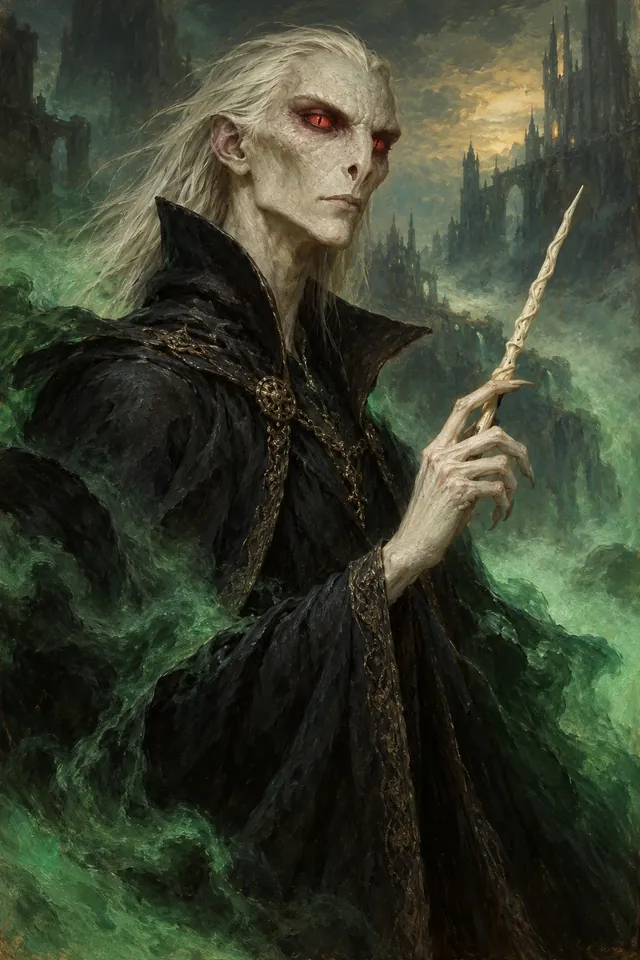
Centuries later, a Slytherin student won the Grey Lady's trust. She told him where the diadem was. He went to find it and turned it into a Horcrux. He hid it in the Room of Requirement, where years later Fiendfyre would destroy it.
A jewel born of intellectual pride ended up in the hands of the man who wanted to be cleverer than death. The full story is in Ravenclaw's Diadem and the Room of Requirement: Horcrux 5.
Luna, the Perfect Ravenclaw
If anyone represents the best of this house, it's Luna Lovegood. Not because she's the most studious, but because she's the freest.
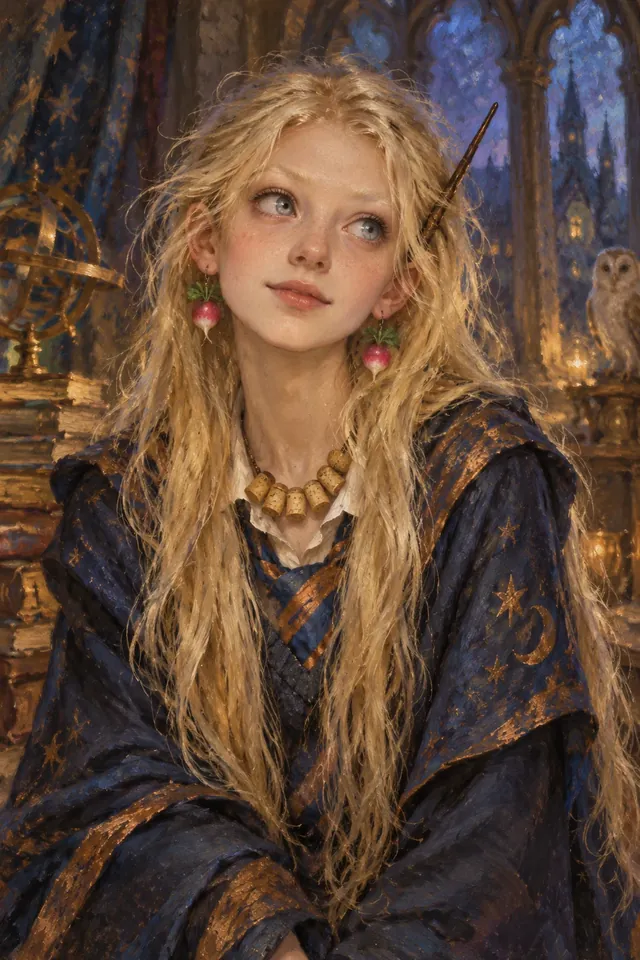
Radish earrings. A necklace of butterbeer corks. Colored glasses for spotting invisible creatures. They've called her "Loony" since she shows up in Order of the Phoenix (ch. 10), and she couldn't care less.
Luna watched her mother die when she was nine, which is why she can see thestrals. She spent months locked in the cellar at Malfoy Manor (Deathly Hallows, ch. 23), and what she did there was cheer up Mr. Ollivander. She uses her mind to see the world in a way nobody else does, and she doesn't need anyone to agree with her.
Helena and Luna are two faces of the same house. One used her intelligence to compete with her mother and lost her. The other uses hers to be herself and hasn't lost a thing.
Book vs. Movie
- The common room door doesn't appear in the movie. On screen, Luna takes Harry straight to the Grey Lady, and the riddle scene is lost.
- Luna in the cellar is in the movie, but only for a few seconds. In the book, her way of looking after the other prisoners comes through more clearly.
- Helena and the Baron's story gets heavily condensed on screen. In the book it's one of the saddest moments of the battle.
What Almost Nobody Notices
- Ravenclaw has its traitor too. Marietta Edgecombe, who betrayed Dumbledore's Army in Order of the Phoenix (ch. 27), was a Ravenclaw. Her mother worked at the Ministry and she never wanted to be there: she joined out of obligation and backed down the moment she felt the risk. Fear of looking bad is the trap of clever people.
- Voldemort collected founders. Dumbledore explains it in Half-Blood Prince (ch. 23): he wanted objects from all four founders for his Horcruxes. Owning Ravenclaw's diadem meant, to him, owning a piece of Hogwarts's history.
- The knocker's question is a portrait of the house. Ravenclaw doesn't care whether you know the answer. It cares how you get there.
What If You Get Ravenclaw?
Don't brag about your grade average. Ask yourself what you'd do with that mind: use it like Helena, to prove your worth, or like Luna, to see what nobody else sees. Our house quiz has thirteen questions built for exactly that, with no trivia.
The previous part of the series is Slytherin House: Why It Isn't the House of the Villains. The next one is Hufflepuff House: The Most Underrated House at Hogwarts, the house everyone makes fun of.
Frequently Asked Questions
What house is Luna Lovegood in?
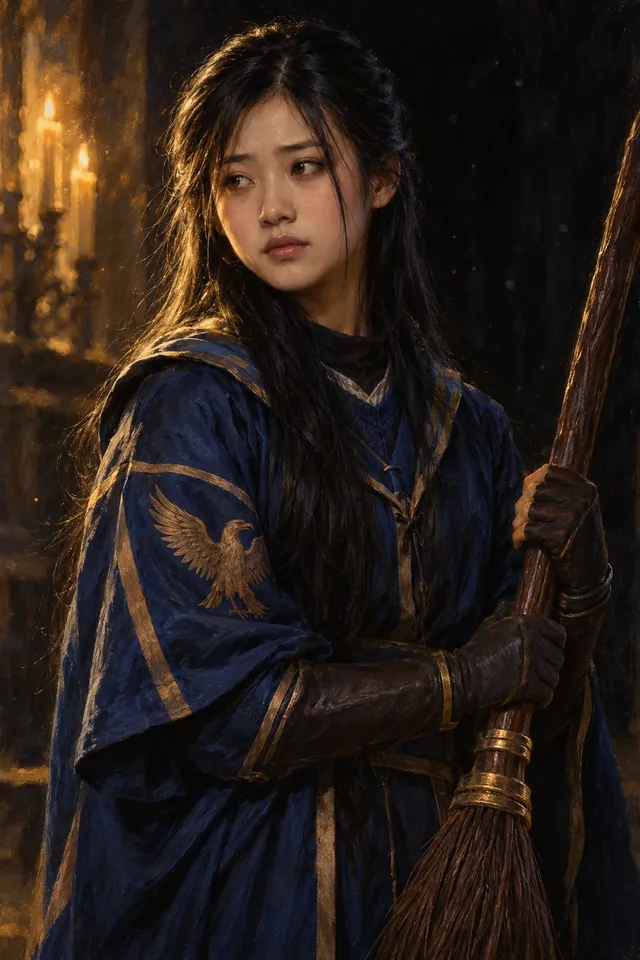
Ravenclaw, like Cho Chang.
How do you get into the Ravenclaw common room?
There's no password. An eagle-shaped knocker asks a question, and if you answer it well, the door opens.
What does Ravenclaw symbolize?
Wit, wisdom and curiosity. Its colors are blue and bronze, its animal is the eagle, its ghost is the Grey Lady and its founder was Rowena Ravenclaw.
This article has a video version on our TikTok.
Content created with AI assistance, reviewed and edited by our editorial team.
Characters in this article
More articles
Gryffindor House Explained: What Nobody Tells You
Gryffindor isn't the house of the good guys, it's the house of impulse. Pettigrew, Sirius, James and Neville show what courage really means in the books.
Hufflepuff House: The Most Underrated House at Hogwarts
Everyone jokes about Hufflepuff until they check the history. Helga, Cedric, Tonks, and why the house of "leftovers" is the hardest one to corrupt.

Slytherin House: Why It Isn't the House of the Villains
Voldemort came from Slytherin, but so did Snape, Regulus and Narcissa. Why the snake house isn't the villains' house, with proof from the books.